

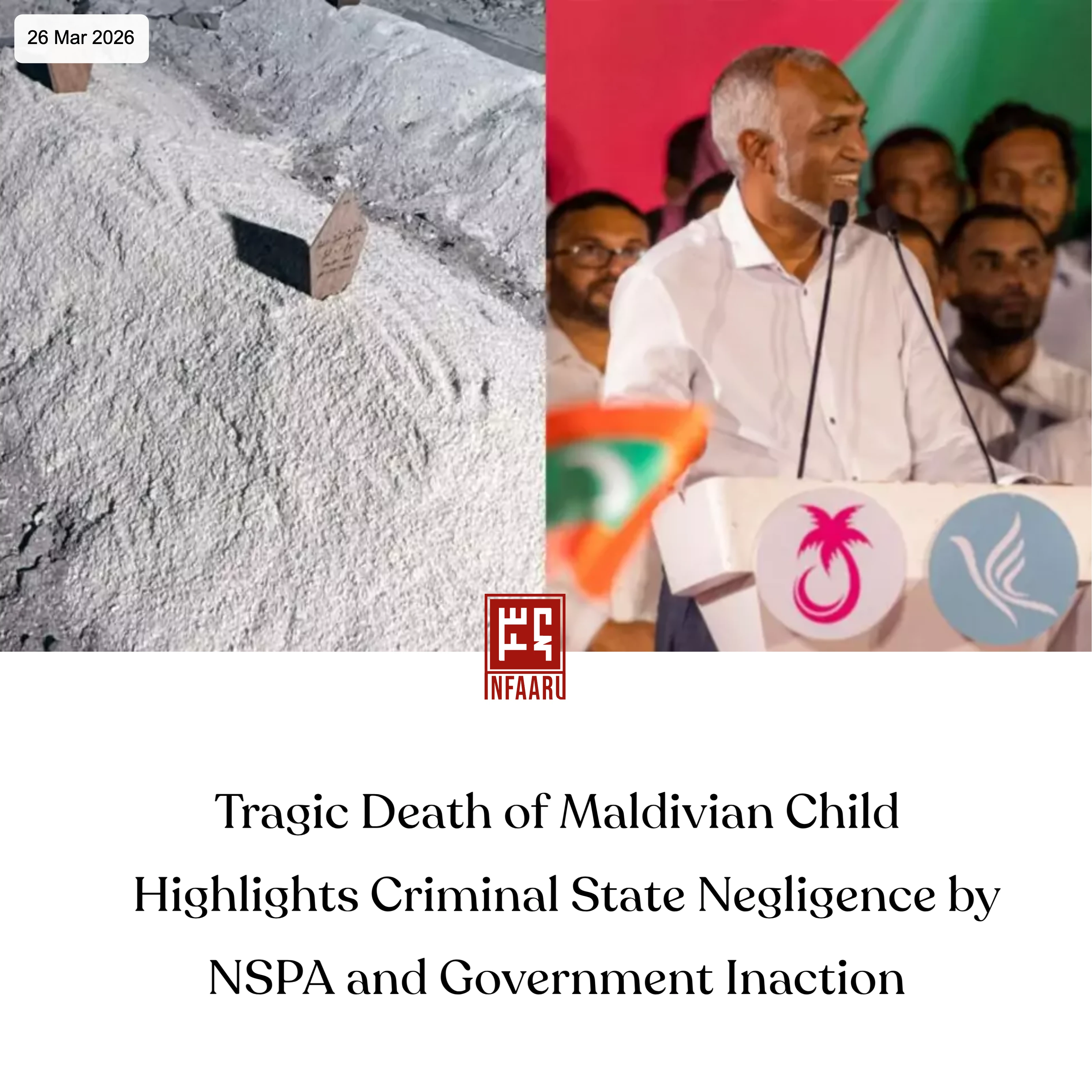
Male’, Maldives – In a devastating case that has shaken public conscience, a young child lost his life after the Maldives’ National Social Protection Agency (NSPA) failed to provide a life-saving medical tube for eight months. The child, known as Azan, passed away on March 25, 2026, despite urgent and repeated appeals from his family and concerned citizens.
In a heartbreaking turn, private individuals eventually managed to source the required tube themselves. It was meant to be delivered as a final hope. But before it could reach him, the child was already in his final moments. What should have been a routine medical provision became a fatal delay.
This is not a minor administrative lapse. An eight-month delay in providing essential, life-saving equipment raises serious questions of gross negligence and breach of duty of care by a state agency entrusted with protecting vulnerable citizens.
This case must be formally investigated. The circumstances surrounding the delay, the inaction, and the failure to respond to repeated appeals demand full transparency and accountability. Yet, no such initiative has been undertaken. Instead, the government appears to be ignoring the case, even going so far as to complain about those who raised the issue on social media, claiming it was highlighted during an election period. Such a response underscores a troubling level of insensitivity and raises serious concerns about the priorities of Muizzu’s government.
There are also growing concerns about systemic issues in medical procurement. Corruption has reportedly increased to an extent where essential medical equipment is often not maintained in stock, creating artificial “emergency” situations. These circumstances then allow institutions to procure items without a competitive bidding process under emergency provisions in the law. Such practices, if occurring, undermine transparency, weaken public trust, and may directly contribute to dangerous delays in accessing life-saving treatment.
Taken together, these failures point not just to inefficiency, but to potential institutional negligence that demands urgent and independent scrutiny. Accountability must extend to leadership. The head of NSPA should resign, as public confidence in the institution has been severely eroded by this preventable tragedy.
Azan’s death is not just a personal loss for his family, it is a national failure. It stands as a painful reminder of what happens when systems meant to save lives instead delay, ignore, and fail. Without immediate reform and accountability, there is a real risk that such tragedies will continue.
May he rest in peace, and may his death finally force the change this country so urgently needs